How I work
UX can not be just about screens and flows, it’s about improving people’s lives while driving business success.
Services
My Approach
Outcomes & Problems
Great UX starts with having a vision for where we want to go and deeply understanding the problem space before jumping into solutions. My approach to UX discovery takes inspiration from Jared Spool’s Strategic UX Framework, ensuring that our work is outcome-driven and truly impactful.
How I start any UX initiatives or projects
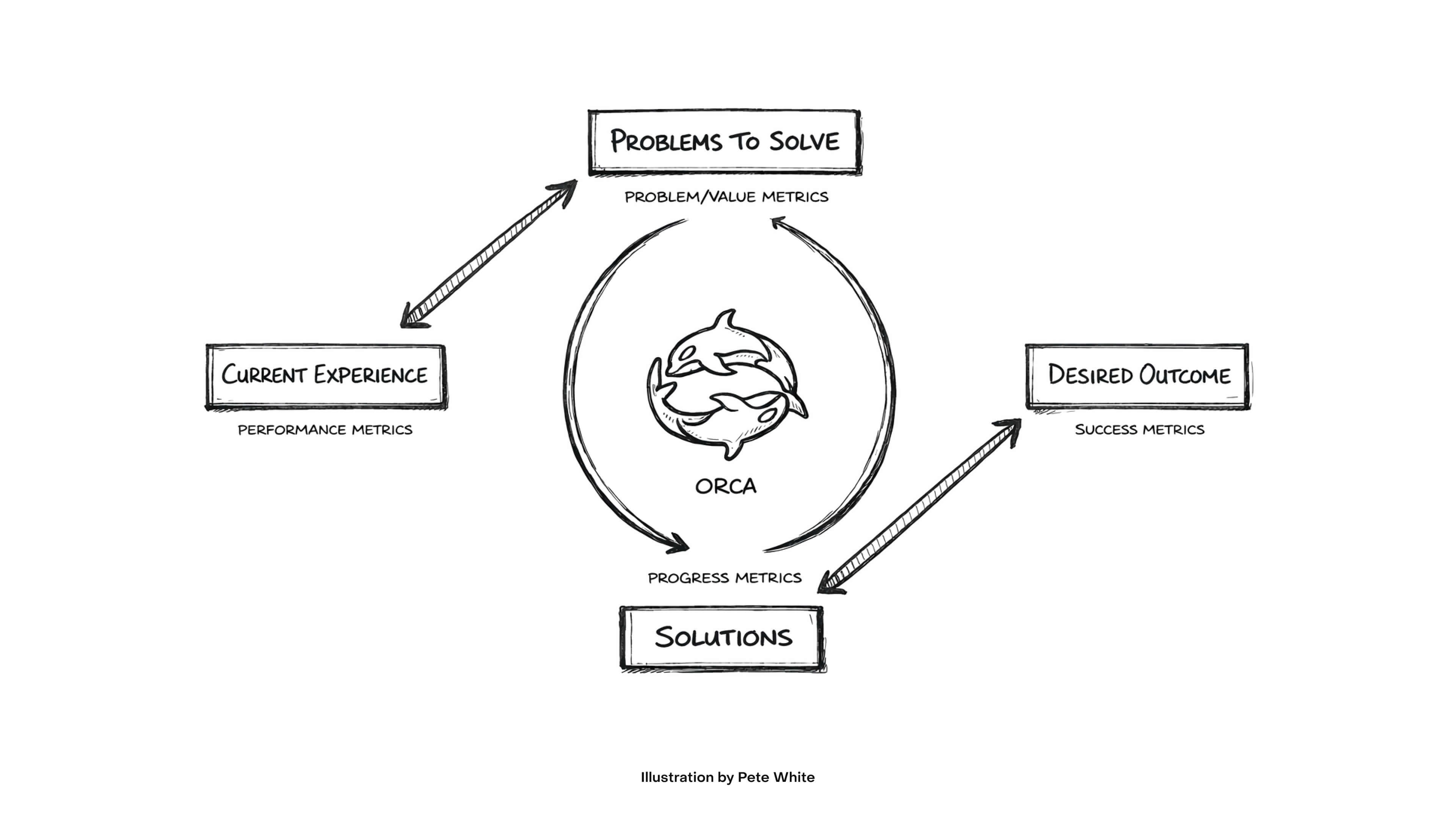
I begin by defining the Desired (UX) Outcome, aligning with stakeholders on how our work will improve people’s lives. Using Jared Spool’s guiding question:
“If we do a great job designing, building, and delivering a well-designed [Feature, Product, or Service], how will we improve someone’s life?”
This creates alignment on goals, priorities, and impact.
From there, using Jared Spool's Strategic UX Research Framework, I first learn about the Current Experience, identifying moments of frustration and delight. This ensures we solve the right Problems rather than just treating symptoms. With problems clearly identified, we can then move on to Solutions, using Sophia V Prater's Object-Oriented UX (OOUX), ORCA Framework (Objects, Relationship, Calls-To-Action, Attributes), crafting ideas and approaches that meaningfully improve the experience and solve our problems, whilst aiming for our Desired Outcome.
My research methods
I tailor research methods based on time and budget constraints while ensuring we gain deep user insights. These include:
Usability Studies (Moderated & Unmoderated, A/B Testing, Eye-Tracking)
Field Studies (Contextual Inquiry, Diary Studies, Shadowing)
Longitudinal Research (Analytics, Behavioural Tracking, Surveys)
Cross-Function Workshops:
Experience Visioning
Problem Framing
Journey Mapping
ORCA Sprint
UX Metrics
Lean Product Canvas
Design Sprint
Aligning UX with business objectives
Research isn’t just about user insights; it must align with business objectives. I map UX contributions back to five key business goals:
Increase Revenue/s
Decrease Costs
Increase New Business
Increase Existing Business
Increase Long-Term Sustainability
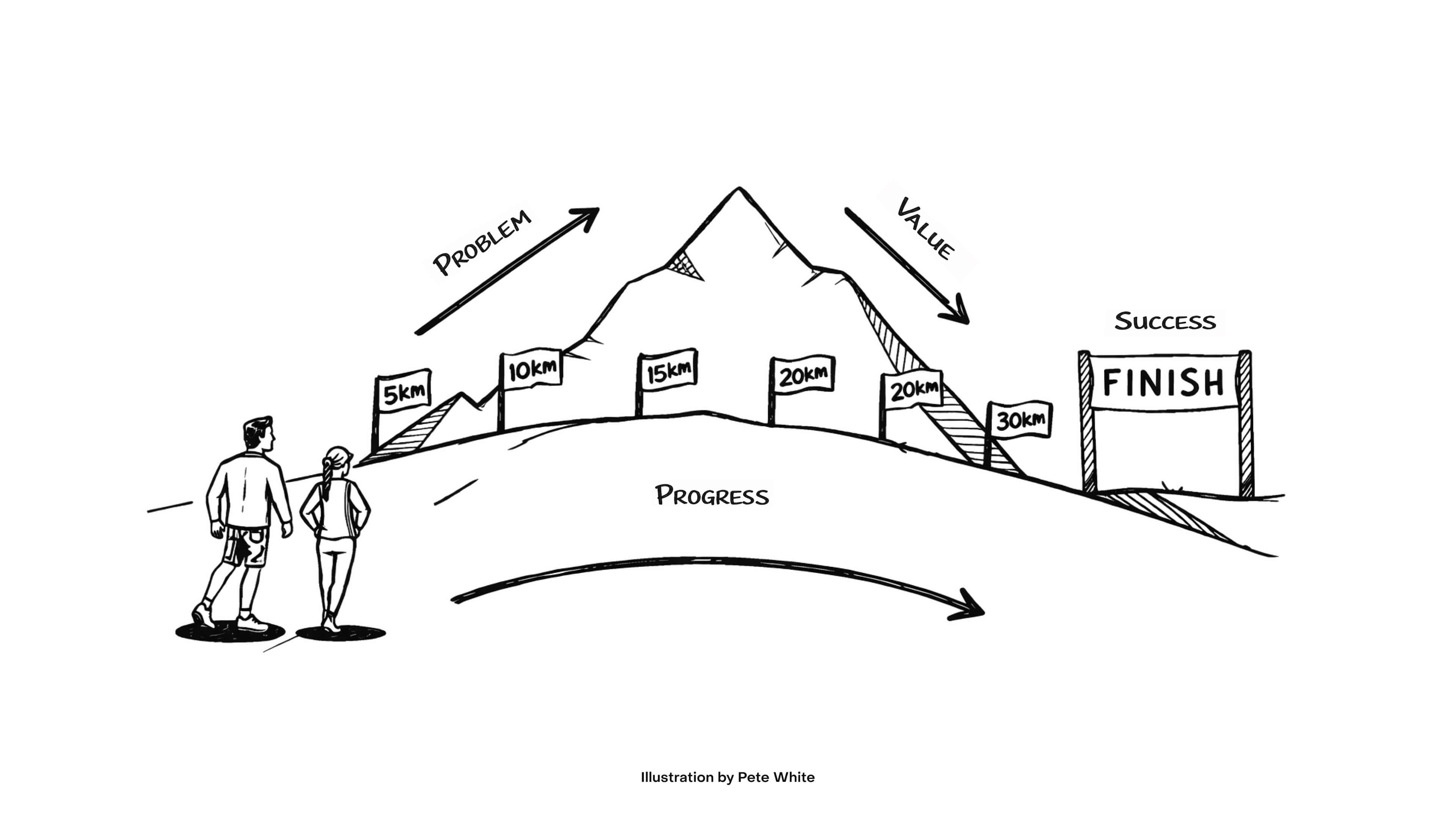
I achieve this by defining UX Metrics (Success, Progress, and Problem-Value) that measure how UX efforts impact key business outcomes.
Success Metrics - Measures when and whether we have successfully achieved the desired outcome. The finish line of a marathon.
Progress Metrics - Measures how well we are doing in our journey to success. The mile markers, e.g. 5km, 10km, 15km, etc, of a marathon.
Problem-Value Metrics - Measures the cost of not solving a problem vs the value it will yield if we are successful. The hill to overcome to reach the finish line.
With a set of Desired Outcomes and their respective UX Metrics, cross-functionally, we can craft Persuasive Stories that directly speak to business objectives and their operational priorities. To ultimately tell powerful and credible stories about how investment in better UX can benefit the organisation.
Alignment
UX isn’t the responsibility of one but the responsibility of all, it must be embedded across all business functions to drive true and meaningful value.
How I align UX with business functions their strategies
Using UX Metrics and strategic thinking, I ensure that UX is not just about design but a core business driver. I actively collaborate with cross-functional teams: Product, Design, Engineering, Marketing, and C-Suite, to ensure UX efforts align with business objectives while delivering meaningful improvements for users.
I drive UX collaboration by:
Running stakeholder and cross-functional team workshops that align people and teams around a shared experience vision.
Embedding UX in Agile processes, ensuring research and design are integrated into product development cycles.
Establishing strong design-development relationships, ensuring feasibility and scalability in execution.
Prioritising UX efforts
Experience Visions are an effective and visual way to ensure prioritisation isn’t just about short-term fixes but long-term transformation. By defining an aspirational experience and mapping incremental steps to get there, I help teams make strategic, user-centred decisions.
Advocating for UX investment
I don’t just talk about the value of UX, I demonstrate it. I practice “show, don’t tell”, using research, usability testing, and direct stakeholder engagement to showcase UX impact. Persuasive storytelling is key, translating UX insights into business impact to secure investment and buy-in.
Execution
Strategy is nothing without execution. I lead UX from research to design execution, ensuring user insights are directly applied to product decisions.
How I move from research to design
Designing with research in mind – I ensure that insights from research directly inform design decisions, using video showreels and direct research playback for the team.
Object-Oriented UX (OOUX) – I practice OOUX and the ORCA framework to create intuitive, scalable, and structured experiences, respecting how users naturally think in objects.
Sketching, Wireframing & Prototyping – I always start with pen and paper, rapidly iterating through to low-fidelity and high-fidelity, validating concepts before committing to execution.
Usability, Field, Testing & Feedback Loops – I prioritise continuous user feedback, refining designs based on real-world insights.
Ensuring consistency and scalability
I advocate for Design Systems & Component-Based Thinking, ensuring that UX is scalable, reusable, and efficiently built. However, I firmly believe that a Design System is only as good as the cross-functional collaboration behind it, which is why I prioritise strong team communication over just creating documentation.
Approach to Qualitative Research & Testing
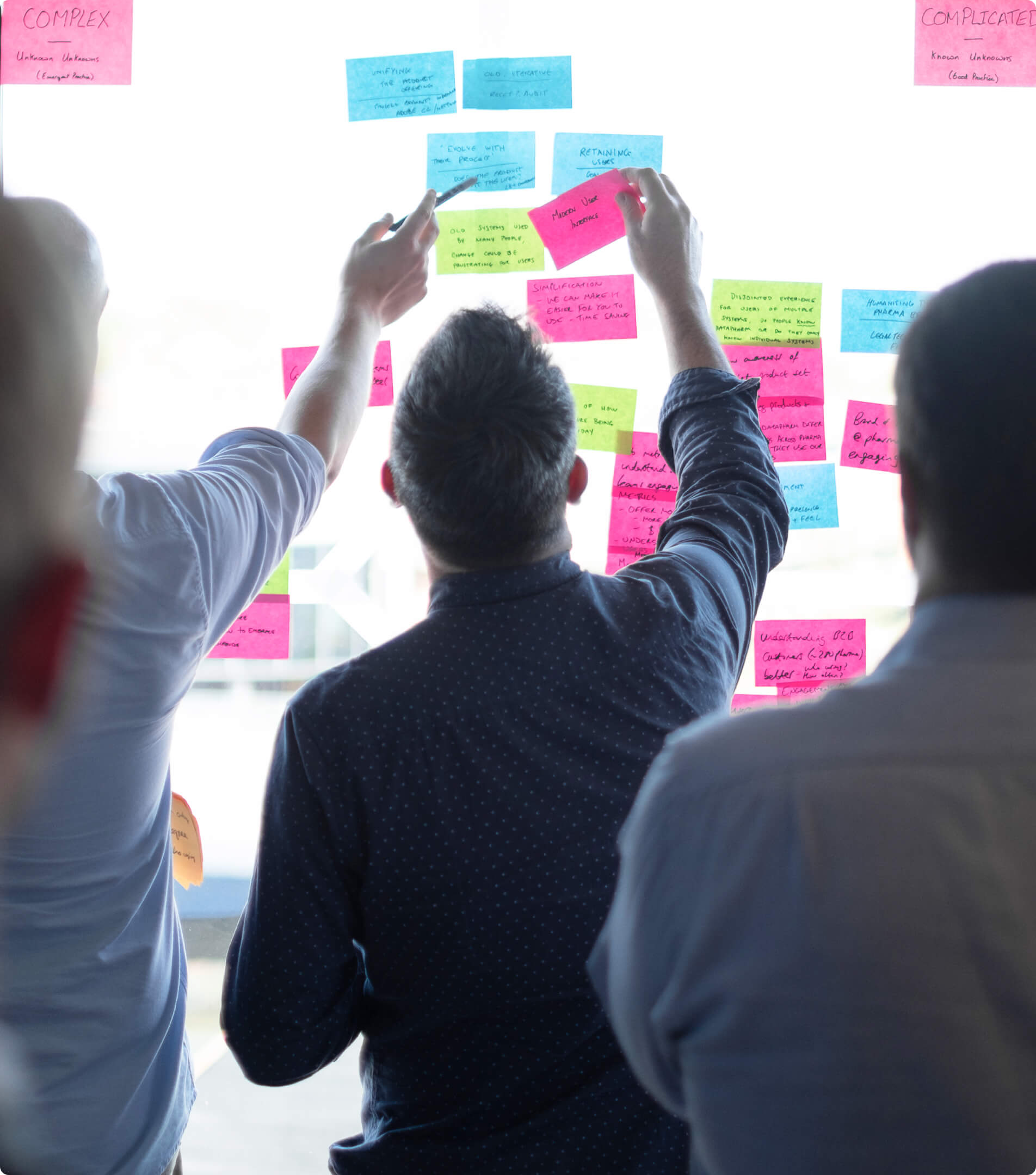
I use an iterative testing approach, ensuring real user feedback shapes product decisions:
01 / Plan & Identify
Define research goals & participant criteria.

02 / Create & Recruit
Script discussion guides or build test prototypes and recruit target users
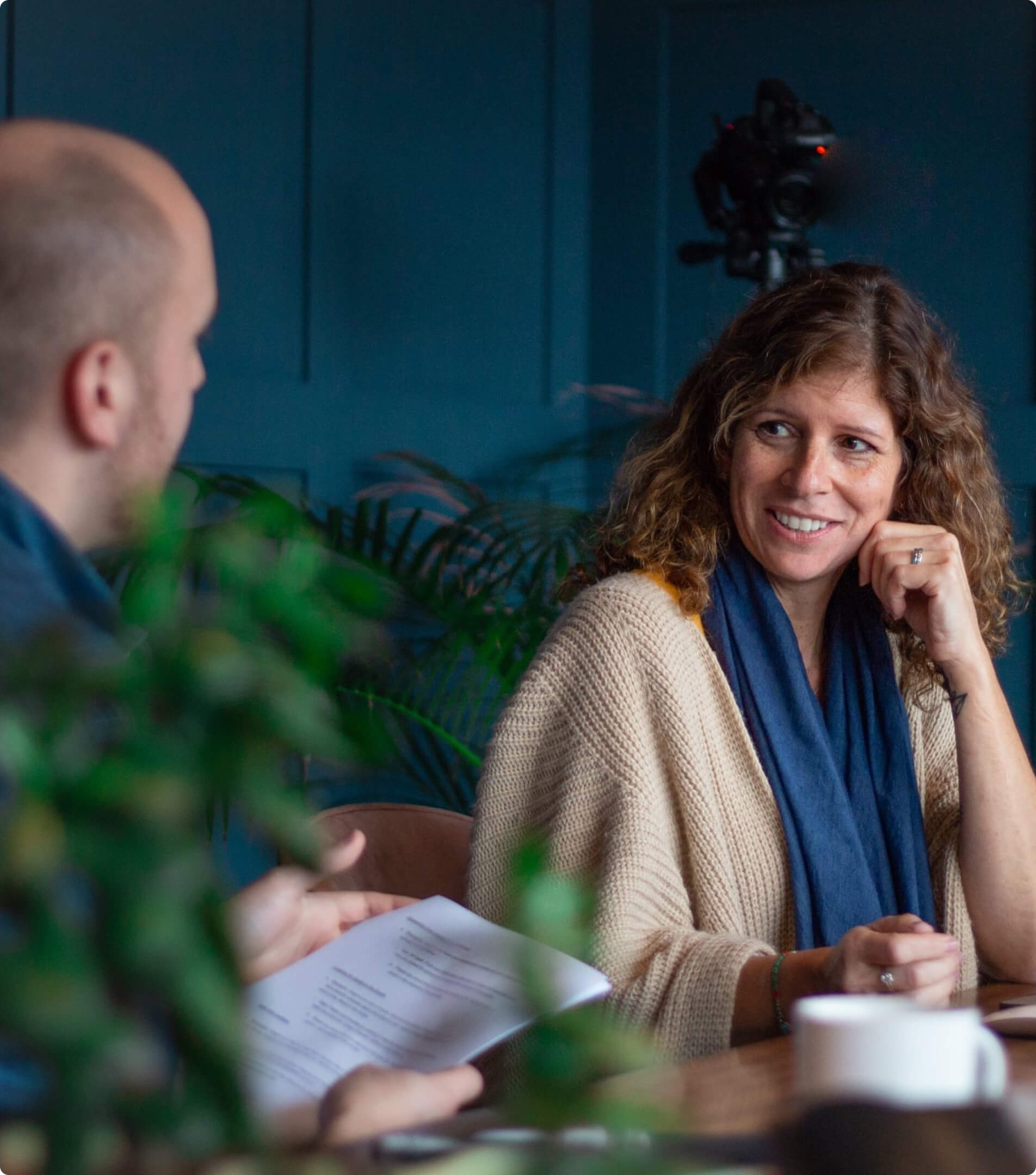
03 / Conduct & Analyse
Capture qualitative and quantitative insights.

04 / Report & Implement
Prioritise findings and drive actionable design improvements.
Understanding the why behind user behaviour is essential, but it’s only half the story. To create meaningful outcomes, I work closely with teams across the business to scale those insights, bridging qualitative depth with quantitative data to understand the why at scale.
Leadership
UX is a team sport, and great experiences are built through mentorship, empowerment, and collaboration.
My approach to mentorship is hands-on:
I lead by example, working alongside teams while guiding strategy.
I tailor mentorship to individual needs, helping designers strengthen their strengths while gradually expanding their growth areas.
I empower teams to own UX decisions, fostering confidence and autonomy.
Balancing leadership with hands-on work
I practice “leadership through doing”, balancing high-level strategic oversight with hands-on research and design contributions. This ensures that I stay connected to real-world challenges while guiding teams at a broader level.
How I encourage teams to think differently about UX
Asking the right questions – I push teams to challenge assumptions and think deeply about user motivations and behaviours.
Moving away from “Figma-First” thinking – I encourage designers to reflect on experience visions, journey maps, explore object-oriented structures, and sketch ideas, before jumping into pixel-perfect designs.
Facilitating cross-disciplinary learning – I bring engineers, marketers, and stakeholders into UX processes, fostering shared understanding and collaboration.
Communicating UX insights to non-UX stakeholders
I tailor my communication based on the audience:
Executive Summaries – Concise, high-level insights for leadership buy-in.
Persuasive Storytelling – Translating UX insights into business impact narratives.
Visual Playbacks – Using journey maps, research showreels, and UX metrics dashboards to make insights tangible and actionable.